


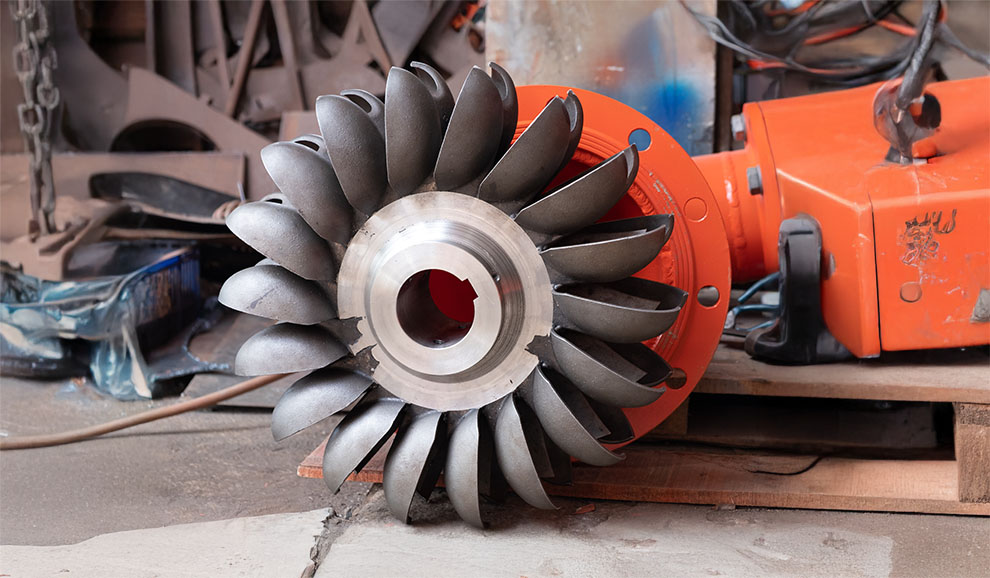
Hastelloy X is a significant contender among specially produced nickel-based alloys. Due to its excellent oxidation resistance, this alloy is widely preferred in industrial applications to ensure long-term use. Due to its properties and advantages, Hastelloy X is used in various industries, including aviation, energy, chemical, and automotive.
1. What is Hastelloy X and What is it Used For?
Hastelloy X is a nickel-based superalloy offering high-temperature and oxidation resistance. Composed of nickel, iron, molybdenum, and chromium, this alloy is frequently used in aviation, gas turbines, and energy production systems.
Due to its high-temperature creep resistance, excellent mechanical strength, and oxidation stability, Hastelloy X is critical in components exposed to extreme heat. It maintains stability even at temperatures between 900 and 1200°C, providing long-lasting performance in various industrial applications.
2. Differences Between Hastelloy X, Hastelloy C-276, Inconel 718, and Rene 41
All four alloys are nickel-based superalloys that provide high-temperature and corrosion resistance. However, due to their chemical compositions, they differ significantly.
- Temperature Resistance
- Hastelloy X: Offers high oxidation resistance up to 1200°C, making it an excellent choice for high-temperature applications.
- Hastelloy C-276: Can withstand up to 1038°C but is more renowned for its chemical corrosion resistance.
- Inconel 718: Provides mechanical strength up to 700°C and is suitable for lower-temperature applications.
- Rene 41 is excellently resistant to temperatures up to 980°C, though its oxidation resistance is less than that of Hastelloy X.
- Corrosion Resistance
- Hastelloy X: Offers excellent oxidation resistance but is not as strong as Hastelloy C-276 in chemical corrosion environments.
- Hastelloy C-276: A preferred superalloy for extreme acidic and chemical environments.
- Inconel 718: Has moderate corrosion resistance but stands out with its mechanical strength.
- Rene 41: Primarily designed for mechanical strength rather than chemical resistance.
- Machinability
- Hastelloy X is one of the most straightforward nickel-based alloys for machine use.
- Hastelloy C-276 is one of the most challenging alloys to machine.
- Inconel 718’s machinability can be improved using precipitation hardening methods.
- Rene 41 is challenging to machine.
3. Corrosion and High-Temperature Resistance of Hastelloy X
Hastelloy X is a nickel-based alloy known for its high-temperature and corrosion resistance.
- High-Temperature Performance
- Provides excellent resistance to oxidation and thermal shock up to 1200°C.
- One of the best options for gas turbines, jet engines, and space vehicles exposed to prolonged heat.
- Corrosion and Oxidation Resistance
- Offers excellent durability against oxidation and corrosion at high temperatures.
- Demonstrates excellent stability against thermal cycling and thermal expansion.
- Not suitable for extreme chemical environments like Hastelloy C-276.
Due to these properties, Hastelloy X is one of the most preferred alloys in aviation, energy, and metalworking industries.
4. Applications of Hastelloy X
As an alloy known for its high oxidation resistance, Hastelloy X has a wide range of applications.
- Aerospace and Aviation Industry
- Turbine blades and combustion chambers in jet engines.
- High-temperature components in hypersonic aircraft.
- Heat-resistant components in space rocket engines.
- Gas Turbine and Energy Production
- Hot sections and combustion cells of gas turbines.
- Resistant inner coatings for high-temperature furnaces.
- High-temperature components in power plants.
- Metallurgy and Casting Industry
- Coatings for high-temperature furnaces and heat treatment chambers.
- Machine parts that work with molten metals.
- Automotive and Motorsports
- High-temperature exhaust systems for racing vehicles.
- Turbocharger components and internal engine parts.
5. Machinability and Weldability of Hastelloy X
Compared to other superalloys, Hastelloy X is more straightforward to machine and weld.
- Welding Methods
The preferred welding methods for Hastelloy X are:
- Tungsten Inert Gas (TIG) Welding
- Metal Inert Gas (MIG) Welding
- Electron Beam Welding (EBW) and Laser Welding
- Machining Techniques
The machining techniques for Hastelloy X include:
- Using carbide cutting tools for material removal.
- Maintaining low cutting speeds and using cooling fluids.
- Performing precision machining with CNC machines.
6. Disadvantages and Alternatives to Hastelloy X
Although Hastelloy X has superior properties, it also has some disadvantages. In such cases, alternative alloys may be a better choice.
- Limited Chemical Corrosion Resistance
While it provides excellent high-temperature oxidation resistance, it is less resistant to chemical environments than Hastelloy C-276.
- High Cost
It is significantly more expensive than stainless steel. Unique production processes and heat treatments are required.
Inconel 625 can be used in specific industrial applications where better corrosion resistance is needed. Hastelloy C-276 may be a better alternative in chemical environments and applications, although it does not offer the same heat resistance as Hastelloy X.
7. Who Should Use Hastelloy X?
Hastelloy X is an excellent material for gas turbines, jet engines, and power plants operating at extremely high temperatures. It protects against high-temperature oxidation and is safely used in the aerospace, metallurgy, and energy sectors.
8. Hastelloy X Processing Companies
Hastelloy X processing and production require advanced technological equipment and are subject to Turkish regulations. At Hursan Stainless, we use high-tech equipment to supply Hastelloy X tailored to customer needs and expectations. Before delivering Hastelloy X to our customers, we conduct various tests to ensure its compliance. For more information on the Hastelloy X processing process, visit our website at https://hursanstainless.com/en/.