

310 stainless steel is a material that offers high corrosion resistance, durability, and an aesthetically pleasing appearance. Also known as SS310, this type of stainless steel is frequently preferred in industrial applications due to its superior temperature resistance, corrosion resistance, and mechanical strength.
What is 310 Stainless Steel, and What is it Used for?
310 stainless steel is a significant type of stainless steel. It is an alloy containing between 25% and 30% chromium and between 20% and 25% nickel. Its chemical composition makes it stand out, providing high-temperature and superior oxidation resistance. Therefore, 310 stainless steel is commonly preferred in environments with high temperatures and corrosive conditions.
310 stainless steel is known for its high-temperature resistance. It is widely used in systems exposed to high heat. This steel type can withstand up to 1150°C and retains its form for long periods at these temperatures. Thanks to its chemical composition, SS310 also shows excellent corrosion resistance, making it suitable for abrasive environments.
Applications of 310 Stainless Steel
310 stainless steel, due to its excellent temperature and corrosion resistance, is a durable and long-lasting material preferred in many industries. These characteristics make it an ideal solution for machines and systems operating under high temperatures and harsh environmental conditions.
High-Temperature Applications
310 stainless steel, due to its high chromium and nickel content, shows excellent resistance to temperatures up to 1150°C. As a result, it is often used in industrial applications requiring high-temperature resistance. Heat treatment equipment, hot air generators, and other high-temperature applications are among the primary areas where this stainless steel is utilized.
Industrial Heat Exchangers and Furnaces
310 stainless steel, with its high temperature and corrosion resistance, is widely used in both internal and external components of industrial heat exchangers and furnaces that operate under high temperatures.
Energy Production and Chemical Industry
310 stainless steel, due to its excellent resistance to acidic and basic environments, is used in equipment such as chemical reactors, pipelines, and heat exchangers. This is especially critical in environments like petroleum refineries and chemical production plants. Additionally, it is used in many energy production facilities, from nuclear plants to thermal power plants, to manufacture equipment resistant to high-temperature environments. It is an essential material in pipelines, valves, and heat exchangers.
Engines and Combustion Systems
310 stainless steel, due to its durability and resistance, is commonly used in critical parts of engines, such as exhaust manifolds, turbocharger components, and combustion chambers. Combustion systems are aggressive environments where high heat and gases are present. In such systems, 310 stainless steel is used in components like combustion chamber walls, steam boilers, furnaces, and heat exchangers. Due to its high heat resistance and ability to withstand acidic and oxidative environments, 310 stainless steel maintains its performance for long periods without deterioration.
Technical Properties of 310 Stainless Steel
310 stainless steel offers numerous advantages for many industries due to its technical properties. With its high-temperature resistance, corrosion resistance, and mechanical performance, this steel type is designed for use in harsh environments and stands out for its advantageous features in such conditions.
Mechanical Properties
Due to its excellent mechanical properties, 310 stainless steel is preferred for high-temperature and harsh working conditions. SS310 has tensile strength, yield strength, ductility, and hardness, making it a durable, long-lasting, and efficient material.
Tensile Strength and Hardness
Tensile strength refers to the maximum stress a material can withstand before breaking. The tensile strength of 310 stainless steel generally ranges between 515-740 MPa, which enables it to withstand high loads. The hardness of 310 stainless steel, which determines its resistance to wear, typically ranges between 170-200 HV.
Heat Treatment and Cooling Behavior
310 stainless steel is typically not subjected to hardening processes due to its high nickel content. This is because this steel type is intended to remain softer and more ductile. The preferred annealing temperature for 310 stainless steel typically ranges between 1040-1120°C. Cooling behaviors for 310 stainless steel are generally performed through controlled or natural cooling methods.
310 Stainless Steel Processing Companies
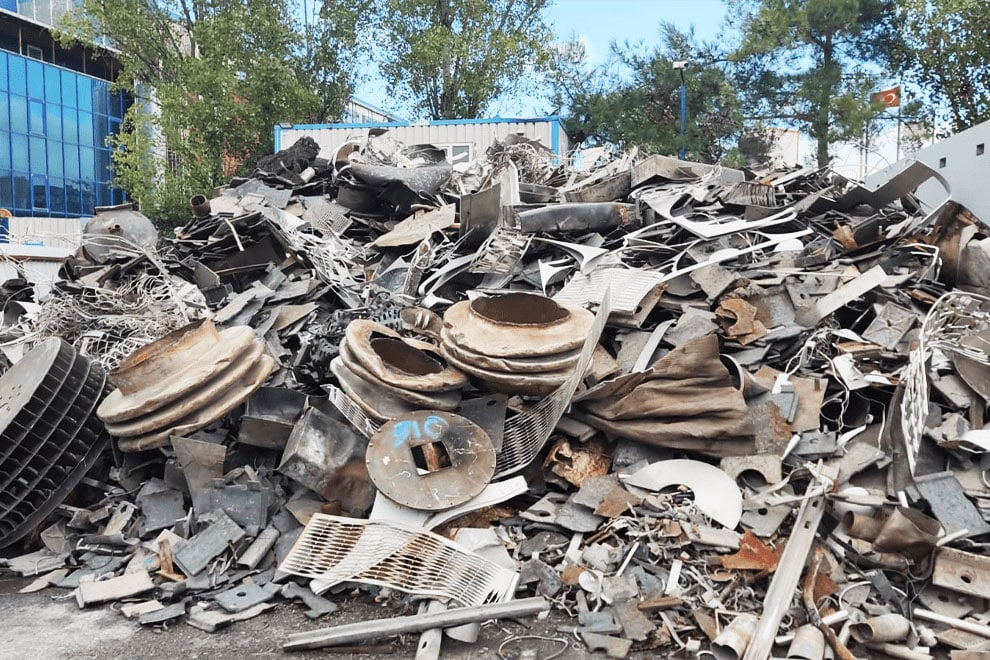
310 stainless steel is generally produced by reprocessing stainless steel scrap materials. As Hursan Stainless, we are one of the leading companies in Turkey that perform this process. We meticulously supply stainless steel materials and alloys, making them reusable to meet the demands of both local and international customers. For more detailed information about 310 stainless steel, visit our website at https://hursanstainless.com/en/.